

Tale Of Content
- Introduction
- Most commonly used bearings in industry
- Ball Bearings
- Roller Bearings
- Tapered Roller Bearing
- Spherical Roller Bearing
- Cylindrical Roller Bearing
- Needle Bearings
- Thrust Type
- Plain Bearings (Bushings)
- Materials Used in Bearings
- Uses and Importance in Daily Life
- Common Problems and Maintenance
- Conclusion
Bearings– essential mechanical parts in a vehicle or machine to support a smooth movement. Whether it is a ceiling fan, a bicycle wheel, a car engine, or a large industrial machine, they are present in almost every device that involves rotation or linear motion. Without them, modern machinery would not function efficiently and would wear out very quickly.
They also support huge loads, providing a smooth rolling, ensuring that the motion is stable and that friction is minimized. This not only improves efficiency but also increases the lifespan of machines.
Bearings also help in maintaining the proper alignment of moving parts, reducing vibration, noise, and wear. Also contributing to energy savings because the smoother the movement, the less force is required, resulting in less power consumption.
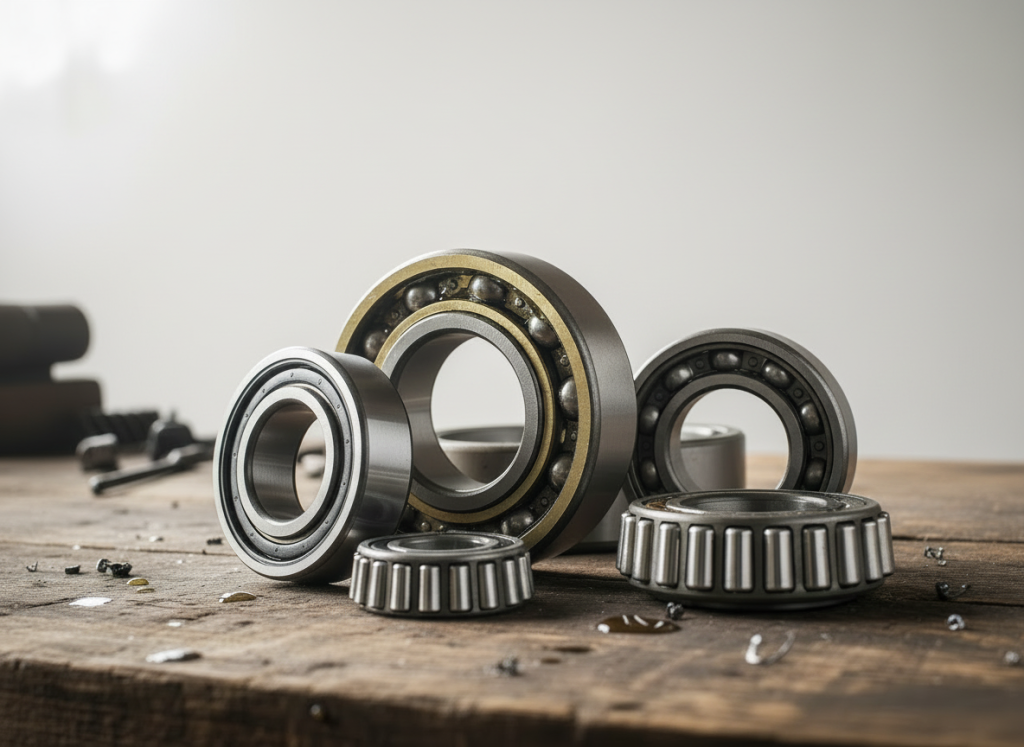
Most commonly used bearings in industry-
There are various types that support different types of machinery. Some of the common types are:
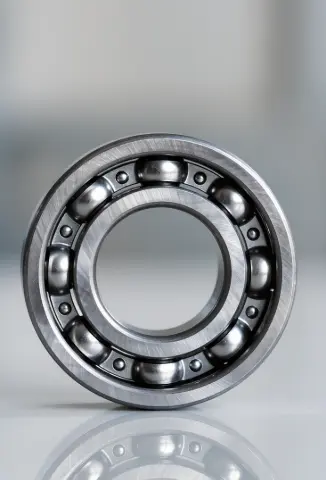
1. Ball Bearings
It uses small metal balls to maintain separation between moving parts. They handle both radial and axial loads and are used in fans, bicycles, motors, and everyday appliances. Their design makes rotation very smooth and fast.
Examples include deep-groove ball bearings and angular contact ball types.
2. Roller Bearings
These use cylindrical rollers instead of balls. They are suitable for heavier loads and are commonly used in conveyor belts, heavy machinery, and automobile components.
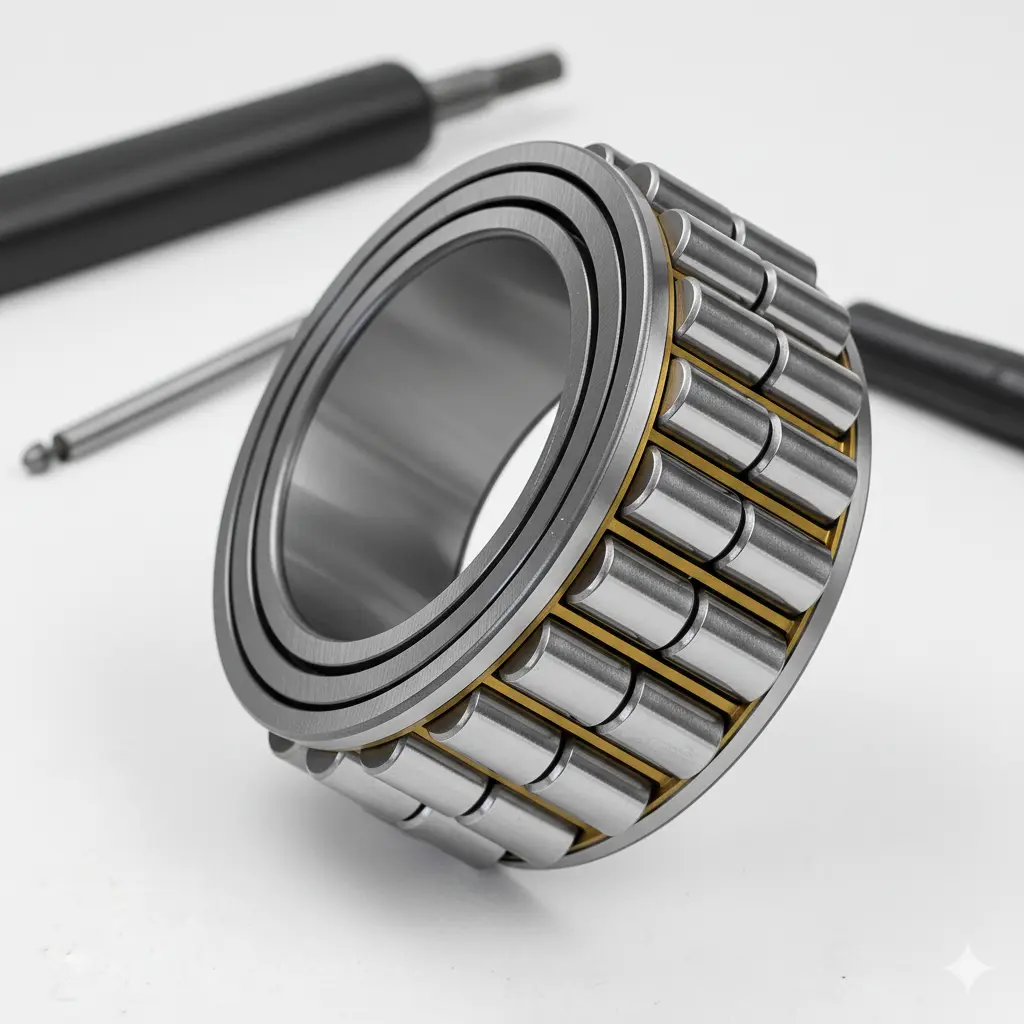
Roller Bearing also include their types, which are as follow:
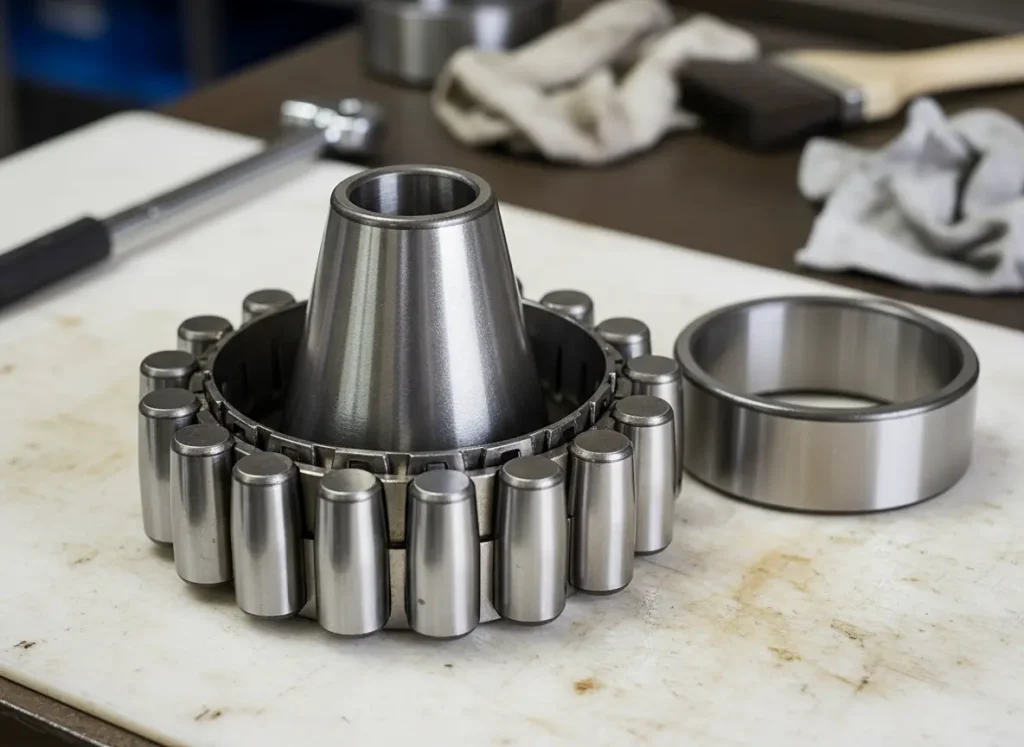
2.1 Tapered Roller Bearing
These are designed to handle large radial and axial forces simultaneously. They are widely used in car wheels, gearboxes, and industrial applications where precise load support is needed.
These bearings are often used in pairs and are separable, with the outer ring (“cup”) and inner assembly (“cone”) mounted independently, making them ideal for heavy-duty applications like vehicle wheels and transmissions.
Components
- Cup: The outer ring.
- Cone: Consists of the inner ring, rollers, and cage.
- Rollers: Tapered rollers that are guided by a flange on the cone.
Key features and Benefits-
- Load capacity
- Load handling
- Adjustable
- Efficiency
- Durability
2.2 Spherical Roller Bearing
They are primarily categorized by their design, which affects their load capacity and performance.
The main types are the CC, CA, and E designs, which differ in their cage type (stamped steel, machined brass, or enhanced steel).
Main design types–
- CC Design: Features stamped, window-type steel cages.
- CA Design: Boasts a machined, double-prong type brass cage, generally for higher load capacity.
- E Design: Uses stamped, window-type steel cages but with enhanced load-bearing capabilities.
2.3 Cylindrical Roller Bearing
They are heavy-duty units that use cylindrical rollers as rolling elements to support high radial loads
Their key features include-
A linear contact area between rollers and rings, which distributes load over a larger surface, and a design that is separable, allowing for easier mounting and maintenance.
These bearings are ideal for high-speed applications and are used in heavy machinery and precision machine tools.
Types of cylindrical roller are-
- Single-row: The most common type, with designations like NU, NJ, NUP, N, or NF, depending on the rib configuration.
- Double-row: These have high radial rigidity and are used for very heavy-duty applications.
- Full-complement: These contain the maximum possible number of rollers and have higher load ratings, but they do not achieve the same high speeds as bearings with a cage.
The common applications are-
Heavy machinery
Precision machine tools
Electric motors
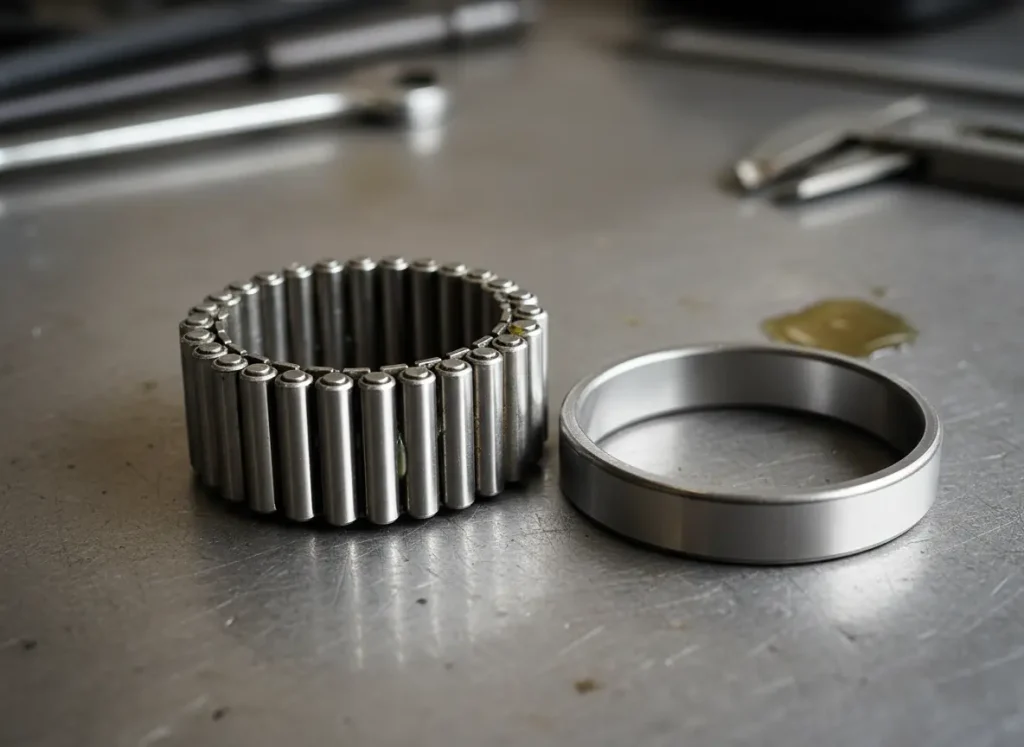
4. Needle Bearings
They contain long, thin rollers. They offer high load capacity in a compact design, making them ideal for engines, transmissions, and small machinery.
5. Thrust Type
These are made for axial loads—forces parallel to the shaft. They are used in steering mechanisms, turntables, propellers, and rotating seats.
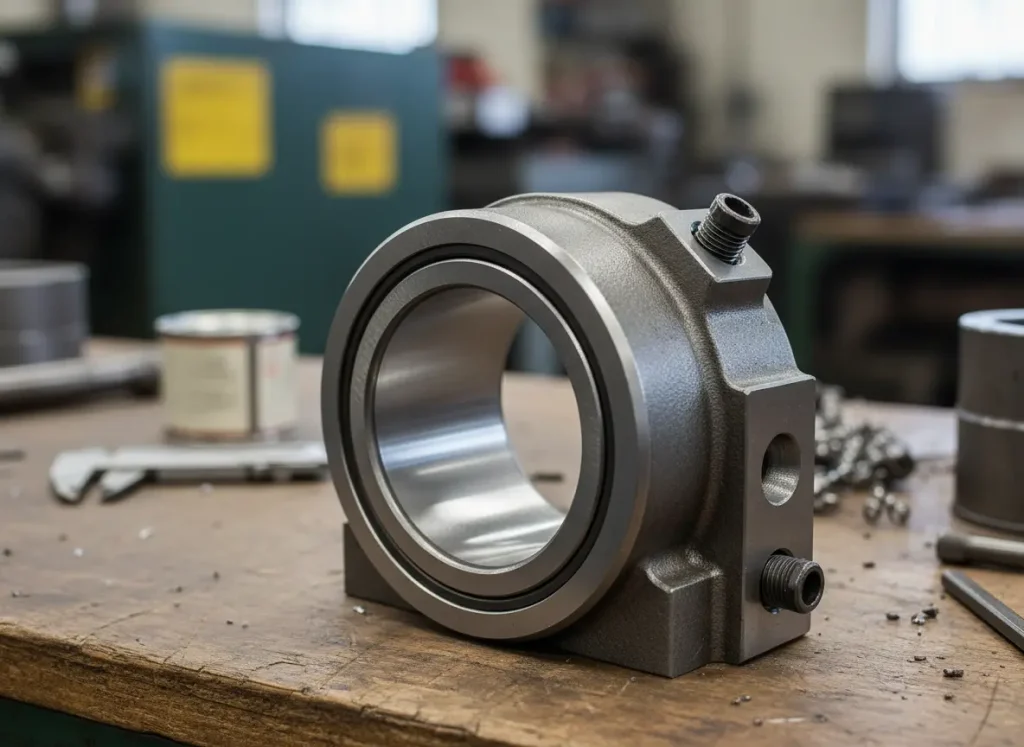
6. Plain Bearings (Bushings)
They have no rolling elements. They depend on lubrication to reduce friction and are used in hinges, pumps, and slow-speed machinery.
Examples include- sleeve bearings and journal bearings, which are common in agriculture and automotive applications.
Materials Used in Bearings-
Manufactured from high-strength materials such as:
- High-carbon steel
- Stainless steel
- Ceramic
- Bronze
- Composite polymers
Lubrication with grease or oil is essential to reduce friction, prevent rust, and extend service life.
Uses and Importance in Daily Life
In household appliances like mixers, washing machines, and ceiling fans, a vital role is played by bearings to ensure smooth and quiet operation. Bicycles and motorcycles rely on them for wheels, steering, and engines. Computers uses tiny version in cooling fans and hard drives.
In industries, bearings are indispensable. They are found in turbines, generators, motors, agricultural equipment, textile machines, mining equipment, and construction tools. In transportation, almost every part of a vehicle—engine, wheels, gear system, and suspension—relies on them.
Common Problems and Maintenance
Failure occurs due to factors such as poor lubrication, contamination by dust or moisture, misalignment, excessive load, or corrosion. When it fails, it can lead to machinery breakdowns, financial losses, and safety risks. Regular inspection, proper lubrication, and timely replacement are essential to ensure reliable machine performance.
Conclusion
To sum up, bearings are small yet powerful components that make modern life possible. They reduce friction, allow smooth movement, support heavy loads, and ensure efficient functioning of machines. From household devices to large industrial systems, they are indispensable in engineering and technology. With advancements in manufacturing and materials, they continue to become more durable and efficient, making significant contributions to the advancement of mechanical systems worldwide.
For more freshly content do follow: Saikprbearing
Our other partner is: https://www.nsk.com/